
Do you end the day feeling a bit frazzled, but put off big fixes that never seem to stick? Small, reliable habits can ease stress without turning your life upside down.
If you’re feeling stretched thin, this post guides you through mapping your stress triggers and establishing a wellbeing baseline, choosing five simple daily habits and anchoring them to things you already do, then tracking progress, adapting when needed and recovering from setbacks. These practical steps help you build a sustainable routine that eases daily tension, improves sleep and focus, and gives clear signals that change is happening.

Map stress triggers, patterns, and your wellbeing baseline
Try a simple three-field stress log you can keep in a notebook or on your phone. For each entry, jot down the trigger, the bodily signals you noticed (for example your breath, muscle tension, appetite or heart rate) and your immediate response, such as thoughts, feelings or actions. Make short entries as soon as you notice stress so details are preserved and repeating patterns start to show.
Set a small wellbeing baseline using a handful of easy-to-rate metrics, for example sleep quality, mood, energy, concentration and a simple physical marker such as resting heart rate. Some research suggests self-monitoring may boost self-awareness and help you respond less reactively, though findings vary and physiological markers like resting heart rate provide only a rough indication rather than a diagnostic measure.
Tag each entry by context, noting who you were with, the task and the location, then scan for recurring combinations. For example, if a particular task often comes with tight shoulders and irritation, that points to a clear target for change.
Try small, one-thing-at-a-time experiments to see what really sparks your stress. Change only a single factor, notice whether your stress eases, and note the result so you can confirm or rule out the link without overcomplicating your records. Focus on triggers that happen often, cause the biggest bother, or are easy to change, then pick one tiny habit to interrupt the trigger-reaction loop. Track that habit against your usual baseline and, if it brings clear improvement, decide whether to keep it, tweak it, or bin it.
Pick simple daily habits and anchor them to your routine
Anchor each new action to a reliable cue and turn it into an if-then plan. For example, if you unlock the front door, then take three deep breaths. Tying new habits to routines cuts decision fatigue and makes you much more likely to stick with them.
Start very small and specific: pick a tiny movement you can do without changing into exercise kit or leaving the room, then slowly increase effort so the habit feels effortless and builds momentum.
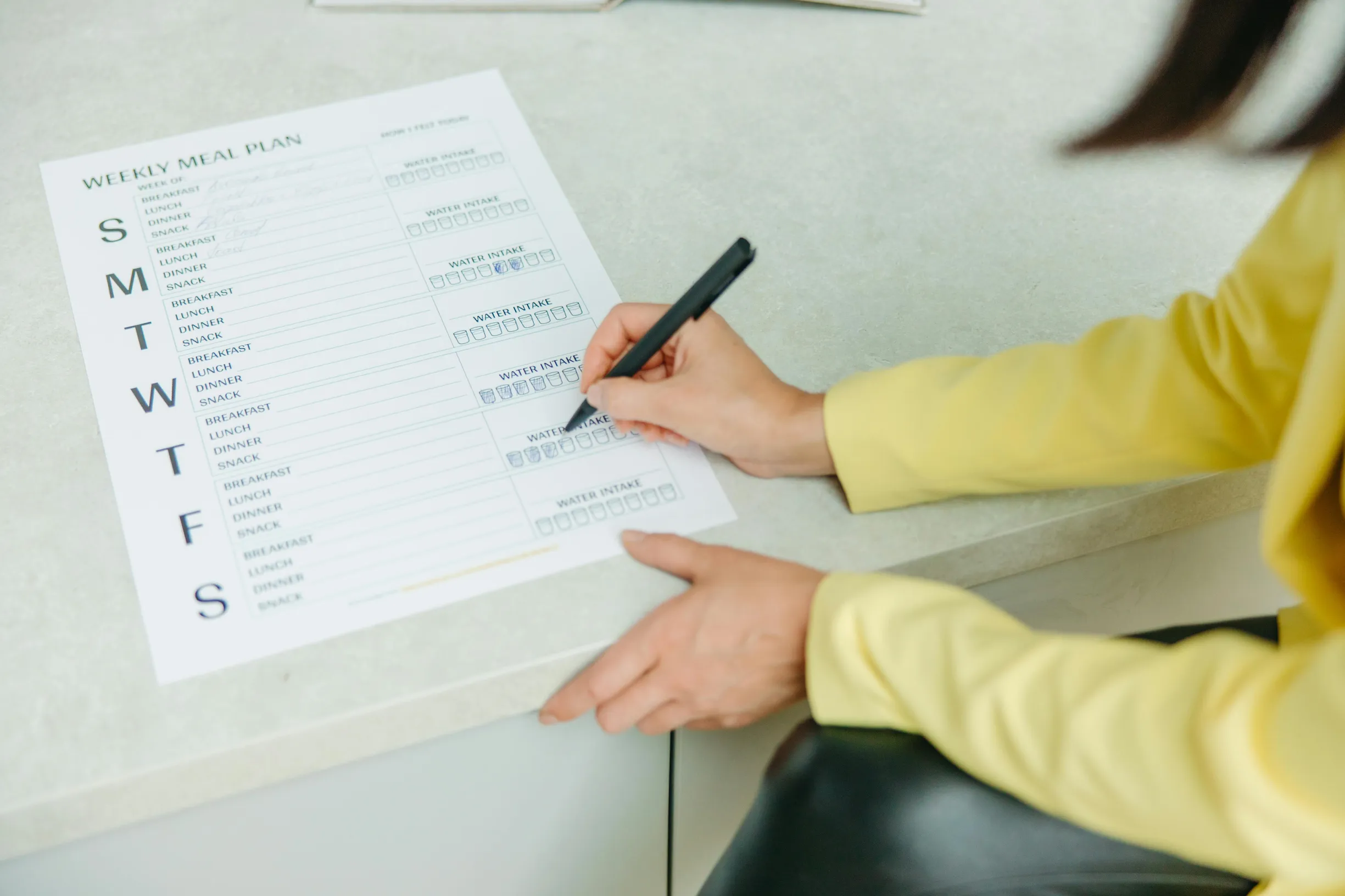
Make the action obvious and remove friction with simple prompts, such as leaving your trainers by the door or putting a notebook on the bedside table. Use a straightforward way to track progress — a tick on a calendar or a quick note on your phone to record wins and missed sessions will do the job.
Add low-effort social anchors to help new habits stick. Tell a friend about your plan, pair the habit with someone else’s routine, or send a quick check-in message when you finish. Keep a visible checklist you can tick off and jot a short note about what got in the way when you missed a go, so you can tweak the cue or simplify the habit. Regularly reviewing those notes turns anecdotes into useful data and helps you find practical fixes that suit your life. Taken together, these steps cut decision fatigue, create small wins and, as behavioural research suggests, improve long-term stickability.
![{"image_loaded": true, "load_issue": null, "description": "The image shows a modern kitchen dining area with a round wooden table surrounded by four matching wooden chairs with woven backrests and light-colored cushions. A potted green plant sits on the table. The kitchen cabinetry is shown in a muted greenish-gray color with light countertops. Behind the table, there is vertical wood panel detailing on the wall. Two windows and a glass door provide views of an outdoor area with greenery and patio furniture. Inside, there are minimalist decorative elements like vases on floating shelves, a round mirror, and abstract framed artwork above a small wall-mounted shelf with cups and a hanging towel. The flooring is light wood, and the lighting is natural and bright, coming primarily from the windows. The camera angle is eye-level with a medium-wide framing that captures the dining table, kitchen cabinets, and part of the outdoor space.", "people": null, "setting": {"environment_type": "indoor", "location_hints": "kitchen dining area with windows and glass door showing an outdoor patio with greenery and wicker furniture", "depth_scale": "medium", "lighting": "natural bright lighting from windows", "temperature": "neutral"}, "objects": {"primary_objects": ["round wooden dining table", "four wooden dining chairs with woven backs", "potted plant on table", "kitchen cabinets", "sink with faucet", "vases on shelves", "round wall mirror", "framed abstract art", "wall-mounted shelf with cups", "towel hanging", "patio table and wicker chairs outside"], "secondary_objects": ["black bowl on dining table", "sunglasses on wall shelf"], "object_interaction": null}, "composition": {"subject_focus": "round dining table with chairs in foreground, kitchen cabinetry and windows in midground, outdoor patio visible through glass door in background", "relationships": "dining table centered in room with chairs evenly spaced around it; cabinetry and decorative elements line walls; windows and door frame outdoor view symmetrically", "depth_structure": "clear separation between foreground dining setup, midground kitchen, and background outdoor scene; overall sharp focus", "camera_angle": "eye-level", "cropping": "medium-wide framing capturing entire dining area and part of kitchen and outdoor space"}, "motion": {"motion_type": "static", "motion_direction": null, "energy_level": "low", "sequence_implied": "single moment"}, "aesthetic": {"medium": "photograph", "style_subtype": "realistic, minimalistic interior design", "color_palette": "muted neutrals with natural wood tones and green accents", "contrast_level": "moderate", "texture_and_grain": "smooth surfaces with natural wood grain texture visible", "postprocessing": "natural lighting with soft shadows, no heavy filters"}, "tone": {"visual_mood": "calm, clean, modern", "lighting_influence": "bright and natural, creating an inviting atmosphere", "camera_distance_effect": "intimate yet spacious"}, "confidence": {"demographic_confidence": null, "activity_confidence": null, "setting_confidence": 0.95}}](https://here4life.uk/wp-content/uploads/2025/04/image-3.png)
Track progress, adapt habits, and recover from setbacks
Try a one-line daily check-in: score your stress from 1 to 5, note the habit you practised and jot down one likely trigger. Keeping tabs like this helps you stick to a new routine, and plotting those scores over time shows whether the habit is actually easing stress or needs tweaking. Run mini experiments that change only one thing at a time, set a short trial and record the outcome as a learning cycle. Use implementation intentions in an if then format to make responses automatic — for example, if you notice rising tension after a meeting, then step outside for a short, structured breathing cycle.
If you find yourself slipping off track, try a simple bounce-back routine that makes restarting as painless as possible. Write down the exact next step in advance so there’s no decision to make, and remove small barriers so the restart needs very little effort. Treat slips as useful data rather than failure — they show you what to tweak.
Use low-cost social accountability to keep momentum, for example swapping brief progress notes with a mate or sharing a short update in a small group. External commitments work best when they stay tiny and specific. Keep things simple by stacking tiny habits onto routines you already do, such as while you’re waiting for a cuppa. Log the micro-wins, celebrate them, and regularly analyse repeated lapses to spot predictable triggers and adjust your cues until the behaviour becomes automatic.
Tying tiny habits to things you already do can break stress cycles, build momentum and even improve sleep, concentration and tension in your body. Keeping a simple log and trying small experiments helps you work out what actually helps, turning vague intentions into clear signs that you are making progress.
Start by mapping your triggers and where your wellbeing sits right now. Pick a handful of tiny actions that are anchored to something you already do, then track the results so you can make small adjustments with minimal faff. Treat it as a short experiment: celebrate the micro-wins, note slips as useful data, and use the patterns to spend your effort only on changes that actually pay off.